
NEWS: i-Sprint & UNIMY Launch PQC App Migration Lab for the Quantum Era
PQC Migration: Securing Your Applications for the Quantum Era
The emergence of quantum computing is creating a major shift in global cybersecurity, particularly in the area of cryptographic protection. Current public-key cryptographic systems, such as RSA, ECC, and Diffie-Hellman, are mathematically vulnerable to quantum attacks through Shor’s Algorithm, where sufficiently advanced quantum computers could potentially break these systems within hours rather than centuries. This creates serious long-term risks for organizations managing sensitive information, including financial transactions, healthcare records, intellectual property, trade secrets, and government data. The growing “Harvest Now, Decrypt Later” threat is especially concerning, as adversaries are already collecting encrypted information today with the intention of decrypting it once quantum computing capabilities mature.
One of the major concerns surrounding Post Quantum Cryptography (PQC) migration lies at the application layer. Applications directly manage sensitive data, business processes, APIs, databases, and encryption workflows. Unlike network infrastructure, which can often be upgraded through firmware updates or hardware replacements, an application-level cryptographic migration requires code modifications, integration adjustments, regression testing, governance coordination, and long-term operational planning. Legacy systems present even greater difficulties due to embedded cryptographic dependencies and outdated architectures that were never designed for quantum resilience. As a result, many organizations underestimate the scale and complexity of migration efforts required at the application level.
The global regulatory environment surrounding PQC adoption is also evolving rapidly. International standards bodies and governments including NIST, the NSA, the European Union, Canada, Singapore, South Korea, Thailand, and Japan are already establishing migration timelines, policy frameworks, and compliance expectations for quantum-safe cryptographic systems. These developments demonstrate that organizations can no longer adopt a reactive approach towards quantum security. Instead, there is a growing need to build crypto agility into organizational systems and cybersecurity architecture. Crypto agility allows organizations to modify or replace cryptographic algorithms without requiring complete redesign of systems and applications, enabling organisations to respond more effectively as cryptographic standards and threat environments continue evolving.
A structured four-phase migration framework consisting of preparation, assessment and prioritization, planning and execution, as well as continuous monitoring and evaluation provides a systematic pathway towards quantum safe environments. A critical starting point is cryptographic discovery, where organisations identify and invent all cryptographic assets, applications, systems, and dependencies across their operational ecosystem. Without a complete understanding of existing cryptographic exposure, organizations will face significant challenges in prioritizing vulnerabilities and implementing effective migration strategies. Hybrid cryptographic approaches combining classical and quantum-safe algorithms were also discussed as practical transitional mechanisms to reduce migration risks while maintaining operational continuity.
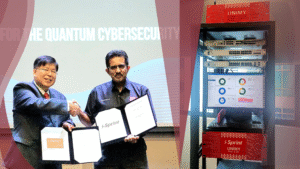
The collaboration between i-Sprint Innovations and UNIMY aims to strengthen awareness, applied research, talent development, and hands on experimentation in post-quantum cybersecurity through the establishment of a PQC App Migration Lab and training ecosystem. The initiative supports stronger collaboration between academia and industry while helping organizations prepare for the operational, technical, and governance challenges associated with the transition towards quantum-safe security systems.
In short, the transition towards quantum-safe security is no longer optional, and organizations that prepare early through strategic planning, crypto-agility, and collaborative innovation will be far better positioned to navigate the coming cybersecurity transformation.
Interested in advancing your organization’s PQC readiness or exploring collaboration opportunities in quantum-resilient cybersecurity? Connect with us to start the conversation.